
Prompt -> Context -> Harness -> Loop -> Graph Engineering Explained Visually
Prompt -> Context -> Harness -> Loop -> Graph Engineering

There's this narrative going around right now: prompt engineering is dead. Context engineering is dead. Now it's all about harness engineering. Then it was all about loops. Now everyone's obsessed with graph engineering. Let me tell you, nothing is dead. We're just learning how to build AI agents with systems thinking.
This article my attempt at showing you the actual progression, and take you through one real use case where we use all five stages, from prompt to graph. By the end, you'll be able to explain every one of these terms to anyone who throws them at you like buzzwords.
Imagine you’ve built a travel-planning assistant. Someone types “plan a 3-day trip to Paris” and your model spits back a generic itinerary: Day 1, Eiffel Tower, Day 2, Louvre, Day 3, shopping. It works in the demo. Then it ships, and within a week your Slack fills up with complaints. The user who told the bot they’d already been to Paris three times gets the same beginner itinerary. The user with a food allergy gets a walking tour that ends at a seafood restaurant. The user who wanted the AI to book something is confused why it just talks.
None of this is a model problem. It’s an architecture problem. Your AI system stopped growing at stage one (prompt), and stage one was never built to carry this much weight.
The five stages, and why each one exists
Think of building an AI system the way you’d think about growing something from seed to orchard, not as a cute metaphor but because the constraint at each stage is the same one gardeners deal with: what you planted last season determines what you can grow this one.
Stage 1: Prompt engineering
This is the seed, the instruction itself: “plan a 3-day trip to Paris.” The question here is simple, what’s the core request. Your AI reads it, does its best, and replies with a generic plan. This works exactly once, for exactly one kind of user: someone with no history, no preferences, no constraints. Which is to say, nobody real.
Stage 2: Context engineering
The seed goes into a pot. Now there’s soil around it, budget, interests, past trips. The question shifts from what’s being asked to what else the AI needs to know right now. Tell it the user already visited London last year, prefers art and food over shopping, and has a moderate budget, and the itinerary stops being generic. It becomes theirs. This is the stage most teams stop at, and for a lot of chatbot use cases that’s fine. But once your AI needs to do something instead of just talk about it, context alone won’t carry you.
Here’s the whole progression, top to bottom is here explained visually with a sample use case. Each stage doesn’t replace the one before it. It adds a layer around it, the way a greenhouse doesn’t replace the pot, it wraps around it.
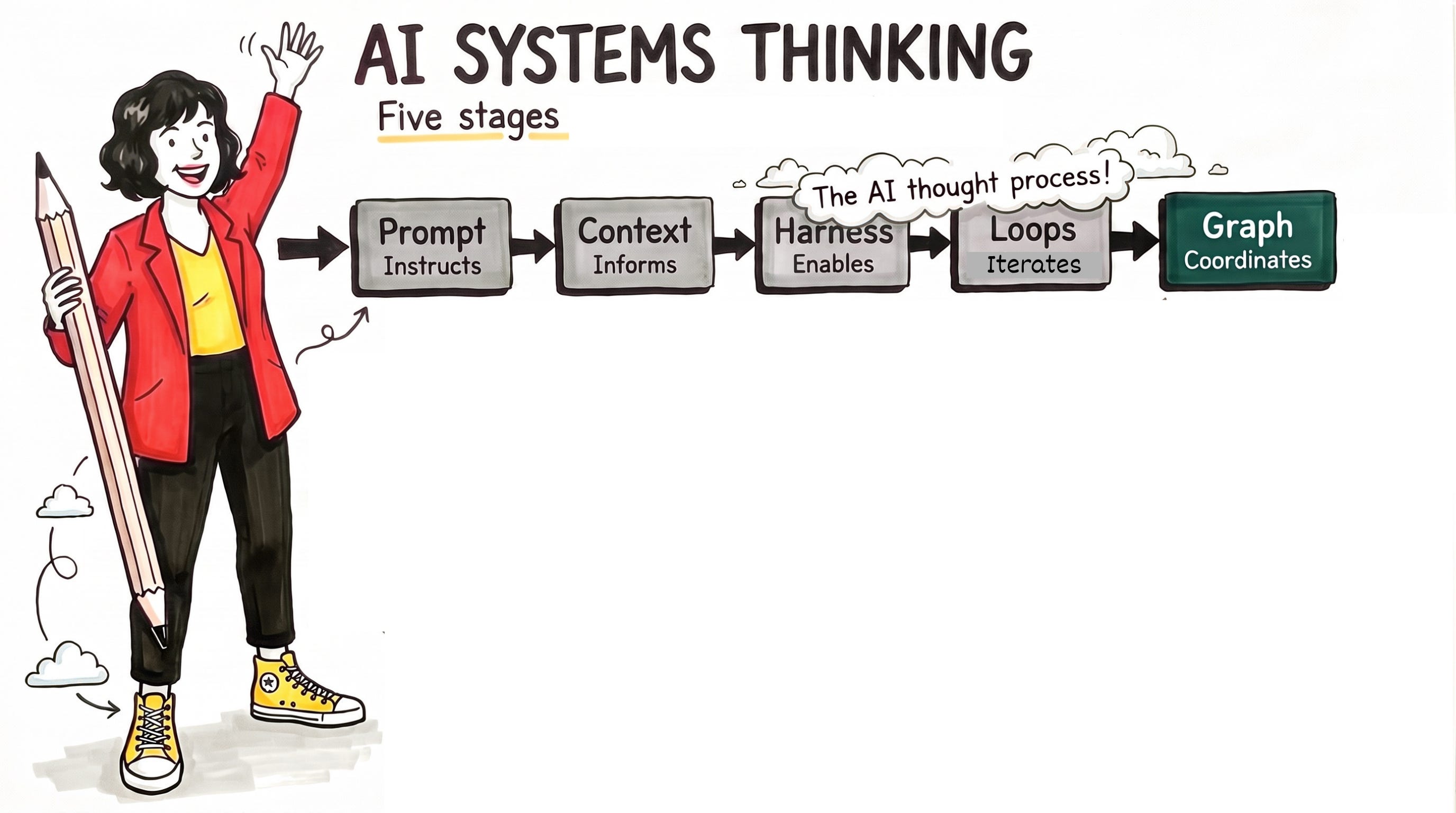
Next let’s discuss Stage 3, 4 and 5 from harness to loop to graph engineering.
